How to get roofing leads without buying them
Bought leads are often shared or resold, and every new opportunity carries an acquisition cost. They can fill a slow week, but they should not be your only source of work. Leads that come from your reputation, finished roofs, and local presence take time to build, but each job can strengthen the next one.
Here is how a small shop builds an owned lead pipeline, and how to make sure not one of those leads slips through the cracks.
1. Claim and work your Google Business Profile
When a homeowner searches "roofer near me," Google says local results are based mainly on relevance, distance, and prominence. You can improve the information Google uses to understand your relevance and prominence; distance depends on where the searcher is. (Google Business Profile Help)
Verify the profile, complete your business information, choose accurate categories, add current hours, and use real photos of your work. The goal is not to stuff the profile with keywords. It is to give Google and the homeowner accurate, useful information.
2. Turn finished roofs into reviews
Google says review count and positive ratings can help local ranking, and reviews give homeowners evidence from people who hired you. Ask consistently so the profile reflects your current work, but never offer an incentive or script what the customer should say. (Google review guidance)
Ask while the job is still fresh. Walk the finished roof with the homeowner, then send Google's direct review link. Make the request easy and let the customer describe the experience in their own words.
3. Make referrals a system, not luck
A referral arrives with context that a cold lead does not: the homeowner already knows someone who trusted you. That makes completed jobs a lead source worth managing deliberately rather than leaving to chance.
Make it deliberate. After every completed job, ask directly: "If you know anyone who needs roof work, we'd take great care of them." Keep it simple and keep it consistent. The shops that win referrals are the ones that actually ask.
4. Work the neighborhood — the right way
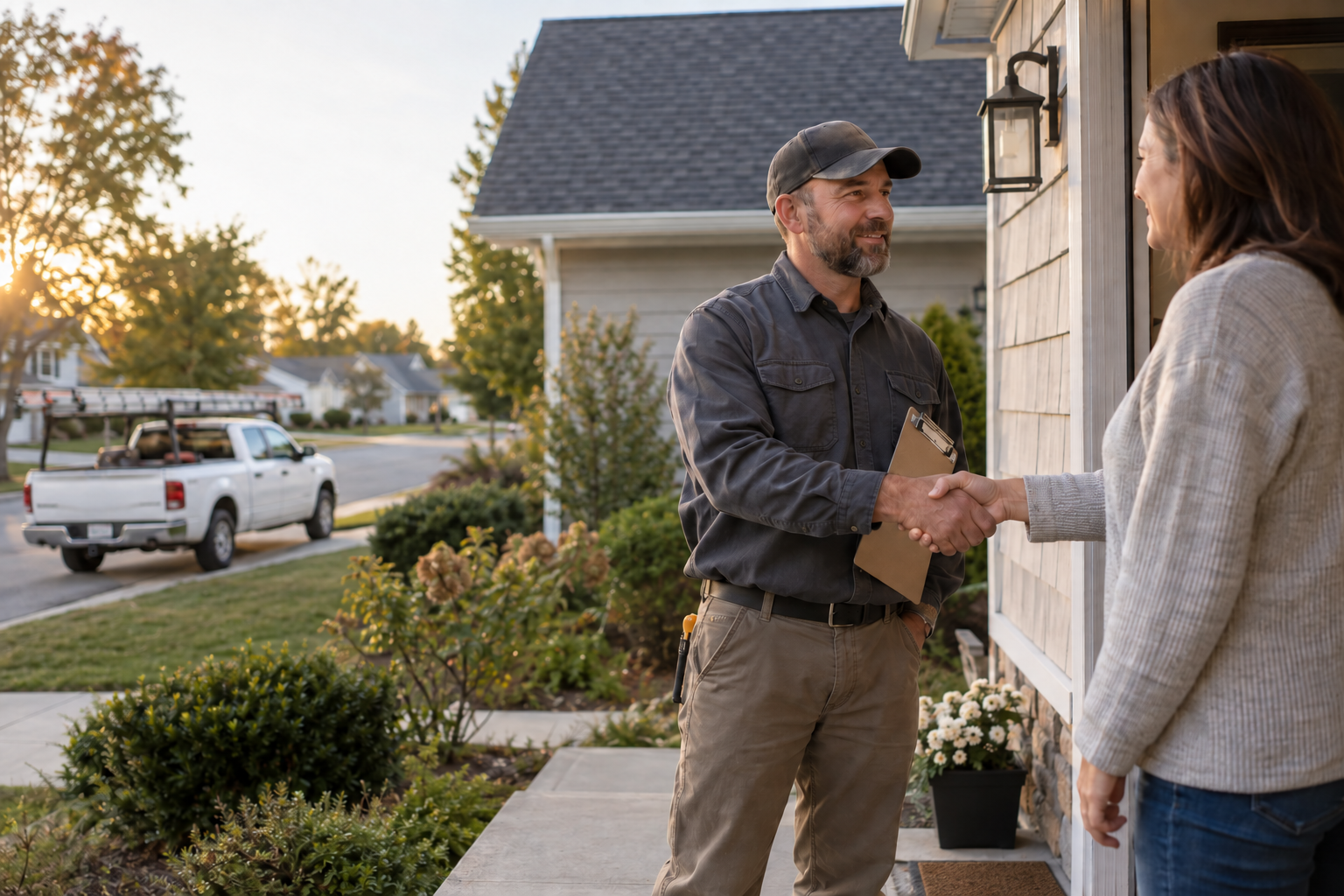
After a storm, nearby homes may have experienced the same weather. When you are already working in the neighborhood, nearby owners are relevant prospects. Knock only where local rules allow it, carry identification and any required permit, explain what you observed without diagnosing unseen damage, and respect a no. Canvassing works only when it builds trust.
5. Put a simple lead form on your website
Your site should do more than list a phone number. A short form — name, phone, address, "what's going on with your roof" — catches the homeowner who finds you at 9pm and won't call until morning. Keep it to a few fields; every extra box costs you submissions.
6. Follow up with past customers
Your finished jobs are a contact list you already earned. A past repair customer may need new work, and a roof you installed may warrant a check after severe weather or according to the maintenance guidance you provided. A short, relevant check-in can reopen a conversation and prompt referrals without buying another lead.
7. Know which channel actually works
Organic lead generation compounds only if you can see what's producing. Ask every new lead how they found you and write it down. Once you know that referrals close and one directory never does, you spend your time where it pays.
Owned leads only pay off if you catch and work every one. That is the part Rooferan is built for. Its embeddable lead widget drops a one-line snippet on your website so a homeowner's form submission lands straight in Rooferan as a new lead — with an automatic acknowledgment email to the homeowner and a notification to your office, so nobody has to be watching the inbox.
From there, every lead is a record you own: contact and property in one place, a required source field so you can finally see which channel each lead came from, and a follow-up date that fires a reminder when it's due — so the past-customer check-in and the storm-season call actually happen. Your finished jobs stay in Contacts as the referral and re-roof list you built. Some features and integrations vary by plan.